
Hazardous Waste Compliance: The Resource Conservation and Recovery Act
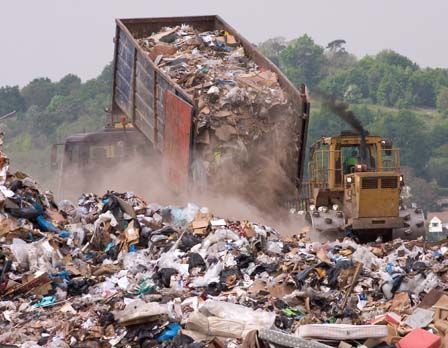
There are more than 2.5 billion tons of solid, industrial and hazardous waste in the U.S. Today, waste industries – from landfills to transfer stations to resource recovery – are all charged with requirements for sustainable business practices and environmental responsibility, which is imperative for the global environment.
Managing the regulatory compliance for cleaning up hazardous waste in the United States is not just about public safety, but it’s also about helping reduce greenhouse gas emissions through a number of practices including materials and waste management. This is why the Resource Conservation and Recovery Act (RCRA) was developed by the Environmental Protection Agency (EPA) in 1976 for guidance and to put regulations and policies in place to ensure the cleanup and safe management of solid and hazardous waste to manage the increasing challenges our country faced from the growing size of municipal and industrial waste.
The term RCRA refers to the public laws, regulations, EPA policies and guidance governing the disposal of solid and hazardous waste in the U.S. Basically it helps to protect the health of people and our environment from any potential hazards caused by the disposal of waste. It also helps us conserve natural resources and energy, reduces how much waste is generated, and ensures that wastes are taken care of in an environmentally-friendly method.
The RCRA defines the framework for the proper management of hazardous and non-hazardous solid waste including the waste management program mandated by Congress, giving the EPA authority to develop the RCRA program. The EPA regulations reinforce congressional intent via specific requirements for waste management that are legally enforceable. How does the RCRA work?
The regulated community is made up of a diverse group (facilities, hazardous waste generators, government agencies, gas stations with underground petroleum tanks, small businesses, etc.) that must understand and comply with RCRA regulations.
The EPA has developed these regulations to set minimum national technical standards for how disposal facilities should be designed and operated. States issue permits to ensure compliance with the EPA and state regulations.
Congress can amend the RCRA and has done so already several times, which, in order to become a law, requires the President’s signature. Then the EPA translates this direction into operating programs by developing regulations, guidance and policy.
Statistics of Interest
The RCRA is involved in overseeing:
- 6,600 facilities have over 20,000 process units in the full-permitting universe
- 3,700 existing contaminated facilities requiring cleanup and reviewing as many as 2,000 possible facilities
- $97.3 million in grant funding which helps states implement hazardous waste programs
ProComplianceWare can assist a company that is required by law to comply with these regulations, (title 40 of the Code of Federal Regulations (CFR), parts 239 – 282.) PCW electronically tracks deadlines for inspections, reporting, sampling and training. The system provides the ability to assign compliance tasks to specific personnel and sends email reminders to make sure the tasks get done on time. Ultimately PCW can help mitigate the costs associated with missed regulatory compliance deadlines and fines.
The EPA provides policy directives that can help laymen clarify the implementation of the regulations. The components that make up the RCRA program include:
- The Act
- Regulations
- Policy, and
- Guidance
RCRA itself establishes the basis for a national system of solid waste control. Subtitle D of the Act is dedicated to non-hazardous solid waste requirements, while Subtitle C focuses on hazardous solid waste (Liquids and gases and must be discarded for solids to be considered waste.)
A Chance for Public Participation
The general public can choose to provide input to the EPA during almost every stage of the RCRA program development and implementation. This happens via rulemaking participation and/or comments on issues such as storage, treatment, or disposal facility permits. The EPA has created an official Public Participation Guide offering methods and tools for the public to reach out and participate in these environmental decisions.
Regulatory compliance is challenging, and it is a serious issue. Managers must keep track of laws, rules and ever-changing regulations and permit requirements. Violations of your industry’s compliance regulations can result in fines and even legal punishment!
If your business has requirements for cleaning up hazardous waste and you are faced with regulatory compliance regulations to uphold all the many policies to ensure the safe cleanup and management of solid and hazardous waste, and you need a system to manage it all, contact ProComplianceWare for a demo at 1-800- 832-8503.
 Peace of Mind
 Low Annual Fee